
Portable AAC block machine in Africa
- Home
- About Us

We’re a global award wining company
Portable AAC Block Machine for Africa-the on-Site Construction Revolution
Autoclaved Aerated concrete blocks are lightweight, strong, and environmentally friendly materials for constructing modern buildings. These blocks are referred to for their reliable thermal insulation, fire resistance, and good handling, falling at par with solid building materials: AAC blocks have now become preferred in their use for sustainable building projects. In Africa, there is rapid urbanization, resulting in affordable housing that should be provided with the most energy-efficient housing for every low-income earner. Demand for innovation in building has outgrown the conventional methods. One such modern technology is that of the portable AAC block machine, which is literally a revolution in enabling onsite production of high-quality AAC blocks. This saves both transportation costs and ensures timely supply making it suitable for urban and remote constructions across the continent.
We’re a global award wining company
What is a Portable AAC Block Machine?
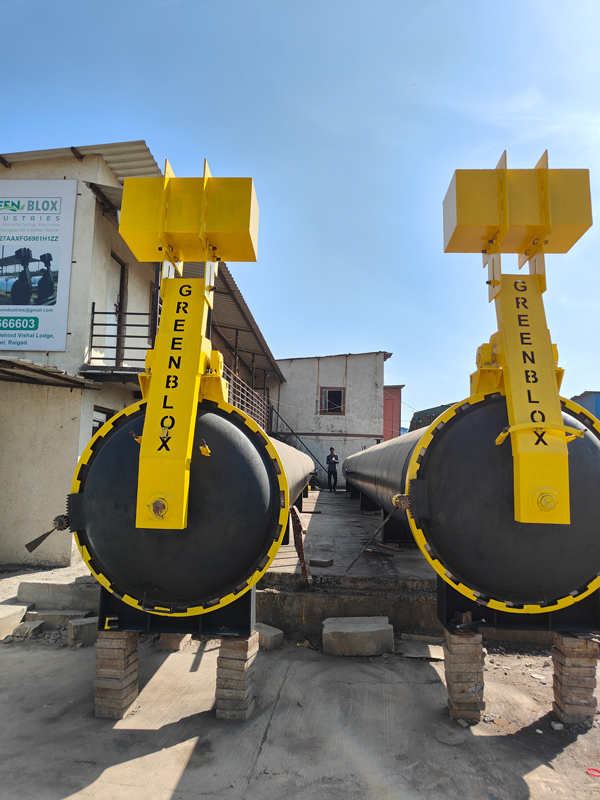
A portable AAC block machine is a mobile compact unit that produces AAC blocks onsite or at the construction site. Unlike traditional machines that offer permanent installation, portable models are easy to transfer and erect, making them most ideal for far-fetched and rural projects. These machines mix cement, lime, fly ash as well as aluminum powder to create lightweight, aerated blocks that are cured for strength and durability. As a result, portable AAC block machines permit on-site production and thus save on logistics, wastage of material, and, above all, availability of blocks for faster and efficient construction.
Advantages of Using Portable AAC Block Machines in Africa
- Cost-Effectiveness: Portable machines are comparatively cheaper than large stationary plants. The lower capital costs allow small and medium-sized enterprises (SMEs) and even community groups to initiate production of AAC blocks. The other important consideration is the savings in transport costs since blocks can be made on-site and thus avoid the great costs of transporting heavy materials over long distances through oftentimes poor infrastructure.
- Decentralized Production: By allowing relocation of the machines, production could happen closer to construction sites, even within remote or rural settings, addressing a big logistics worry for many areas of Africa that simply have not developed the transport infrastructure. It thus lends to empowering communities in self-production of building materials.
- Job Creation: The use/making of such machines provides many jobs locally. Local jobs arise from significant inputs within a decentralized production model: trained operators, maintenance, suppliers for materials and distribution. These create a lot of localized economic activities and are, therefore, in consonance with many development goals of strengthening local economies.
- Resource Efficiency: AAC blocks are made out of locally available materials like sand, cement, lime, and a foaming agent. The portable machines will thus use locally available materials, thereby conserving resources and minimizing the environmental impacts related to the transportation of imported materials. The other benefit of this method is the generation of minimal waste with respect to the other conventional block-making processes.
- Faster and Lighter Construction: AAC blocks are about 1/3 the weight of concrete blocks, making them easier to handle and speedier in the construction process. Fewer blocks are required in wall construction due to the large sizes of the blocks, translating into less time spent on labor. The lightweight nature of the blocks may also imply savings in foundation costs.
Why Portable AAC Machines Are a Game-Changer for Africa
Fighting the Accessibility Barrier
- Cost Effectiveness: Conventional dedicated AAC devices are way too expensive. The portable AAC machines, which are usually just apps on smartphones or tablets, are a fraction of the cost and, therefore, with positive consideration by families and communities.
- Availability: Smartphones and tablets have become rather commonplace in many parts of Africa, thus reducing the need for specialized imported hardware. Adoption will come faster and maintenance simpler.
- Portability and Social Acceptance: Unlike the older devices which are heavy and conspicuous, a smartphone or tablet is regarded as an acceptable and discreet item. This reduced stigma and encouraged users to carry the communication aids and use them in all social contexts.
Supporting Communication and Inclusion
- Multilingual Support: Portable AAC applications can be customized to include various African languages, dialects, and culturally relevant symbols. Effective communication and the preservation of cultural identity, which is often lost with English-only AAC devices, depend on such a consideration.
- Educational Opportunities and Literacy: These devices empower students with communication disabilities to participate in class, express their needs, and develop literacy skills. Thus, opening avenues for education previously closed to them.
- Increased Independence: Portable AAC devices encourage independence through allowing the client to express their needs and choices-from ordering food to participating in community functions to seeking employment.
Conclusion
In short, portable AAC machines are transforming the communications landscape for the disabled on the African continent. By employing existing technology to create inexpensive, culturally relevant, and user-friendly communications tools, they offer voice but also promote inclusiveness and equity in society.