
AAC block production line manufacturer in Nigeria
- Home
- About Us

We’re a global award wining company
AAC Block Production Line Manufacturer in Nigeria-Improving Modern Construction Efficiency
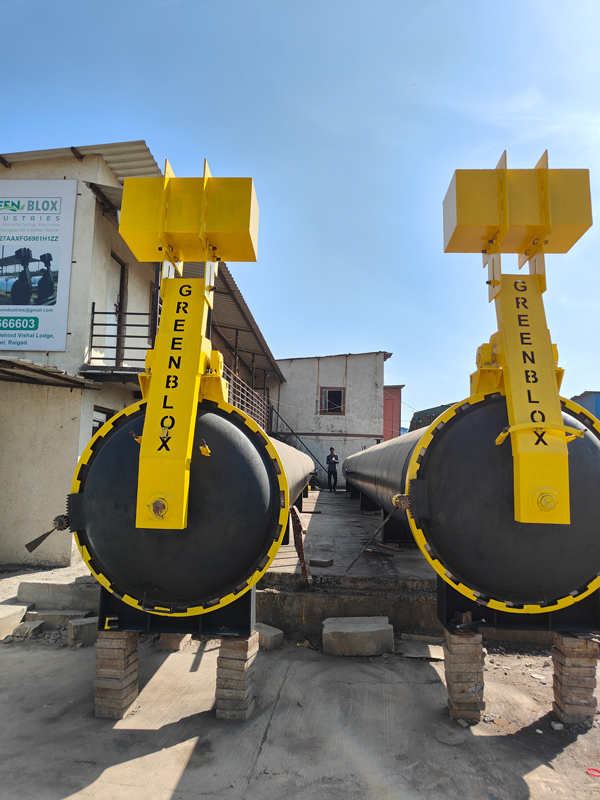
These are lightweight, durable, and eco-friendly AAC blocks. They are redefining the future of construction in the modern world. Increased demand for these blocks in Nigeria by builders and developers is attributed to their preference for a more sustainable and cost-effective alternative to traditional bricks and concrete. As cities grow and come to terms with the need for low-cost housing, AAC becomes the preferred material nowadays for construction. Controlling the high quality of AAC block production lines plays a great role in meeting these demands as high-quality equipment ensures consistency, speed, and less waste. Understandably, working with a proven manufacturer of AAC block production line could mean years of durability and reduced energy consumption and costs for Nigeria's construction industry.
We’re a global award wining company
What are AAC Blocks?
AAC blocks are an innovative, precast, lightweight building material consisting of cement, lime, fly ash, water, and a very small quantity of aluminum powder. During the manufacturing operation, chemical reactions occur, which result in millions of very tiny air pockets, giving the AAC blocks their peculiar cellular nature. This makes them significantly lighter as compared to traditional clay bricks or concrete blocks while still being much stronger and more durable. Besides these qualities, AAC blocks are fire-resistant, termite-proof, and provide superior thermal and sound insulation, suitable for hot climates like Nigeria’s and needs for modern urban housing. They also have a uniform shape and a larger size, which would otherwise make construction using these blocks consume less mortar and save time. Consequently, with the increasing emphasis on sustainable and affordable housing, these blocks are poised as the intelligent, eco-friendly choice available to builders and developers in Nigeria today.
Benefits of Choosing a Reliable AAC Block Production Line Manufacturer
- Machines of high quality with advanced technology:
It is a trusted manufacturer that offers hi-tech machinery with precision, durability, and consistent performance. Advanced technology in ensuring that each AAC block produced passes through international quality standards and minimizes defects while improving strength.
- Personalized Production Capacity for Small, Medium, and Large Projects
All projects would differ, and a reliable manufacturer has production lines that can be customized according to your requirements. It can be for a small developer or a large company in construction. You can choose your right capacity to suit your business goals and market demand.
- Improved Energy Efficiency and Reduced Operation Costs
Modern AAC block production lines are meant to consume less power, water, and raw materials but still produce lots of outputs. It makes the reduced operational cost responsible for affordable AAC blocks and widely profitable for Nigerian builders and developers.
- After Sale Services, Installation Support, and Training for the Operators
Machine supplies only by a professional manufacturer in real cases-set up properly and used for a long time after. From installation assistance to full operator training and aftersales care, a trustworthy partner helps you achieve a quick and maximum-investment return.
Why Nigeria Needs More AAC Block Production Lines
- Increased Urbanization and Housing Demand
The rapid increase in Nigeria’s population especially in urban centers is generating a massive demand for housing. Urbanization creates a massive demand for building materials. The traditional building materials such as sandcrete blocks, are generally weak and consume time in construction, while AAC blocks have low density and high strength, giving very rapid construction time that is urgent to meet the growing housing needs of an expanding population. The distinctive properties of AAC allow it to be adopted across large-scale rapid construction projects, something that is necessary to close the housing deficit for the country.
- Government Push for Sustainable and Affordable Housing
The government of Nigeria is more concerned about a housing provision system that fulfills an entirely new set of criteria; namely, affordable and environmentally sustainable. These criteria fit AAC blocks perfectly. They are produced from the local materials that are abundantly available: cement, lime, and fly ash. They are, therefore, eco-friendly alternatives to traditional bricks and blocks. Furthermore, the excellent thermal insulation characteristics help to save a lot of energy in buildings, which correlates with the international efforts directed toward the creation of green buildings. All in all, AAC is an important component in the government’s plan to provide greener, energy-efficient homes for its people.
- Local Manufacturing Will Reduce Import Dependency and Logistics Costs
A significant number of building materials in Nigeria are imported or use imported components, furthering the local production of AAC blocks to reasonably decrease this reliance. The latter creates stability in the supply chain and renders the market for building materials less susceptible to the downsides of the international economy. Besides, the production of AAC blocks in-the-country is lowering down the logistics and transport cost which in turn is making construction affordable. This aids local economy growth and creates jobs for the populace while boosting the local manufacturing industry.
Conclusion
Thus, there arises a convergence of factors necessitating the establishment of more AAC block productions lines in Nigeria: the demand for housing due to rapid urbanization; the government’s initiative toward sustainable housing solutions; and the cost aspect of local production. More investments in the AAC production will help to gain closure on the housing gap and enhance environmental sustainability and economic independence. Hence it is a leap that must be taken for the future development of Nigeria.