
AAC block machine with autoclave in Ghana
- Home
- About Us

We’re a global award wining company
AAC Block Machines with Autoclave in Ghana: Revolutionizing Construction Efficiency
With lightweight, durable, and eco-friendly characteristics, Autoclaved Aerated Concrete (AAC) blocks are transforming the modern construction industry. Further, AAC blocks hold a great promise because of their qualities such as thermal insulation and fire resistance, rendering them a wise choice for any sustainable building solution. With urbanization and infrastructure projects expanding in Ghana, the need for efficient and cheap construction materials is rising. AAC block machines with autoclaves are crucial for producing quality blocks up to international standards and, through energy and material savings, conceiving a conjunction of accelerated local manufacturing in Ghana. By reducing reliance on imports with local manufacturing, Ghana can fast-track project implementation, ushering in green construction at affordable costs.
We’re a global award wining company
What Is an AAC Block Machine with Autoclave?
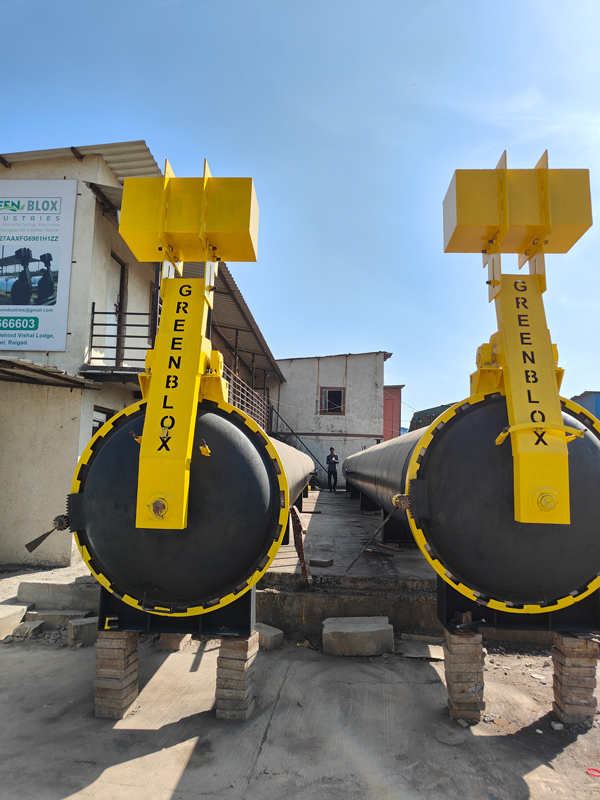
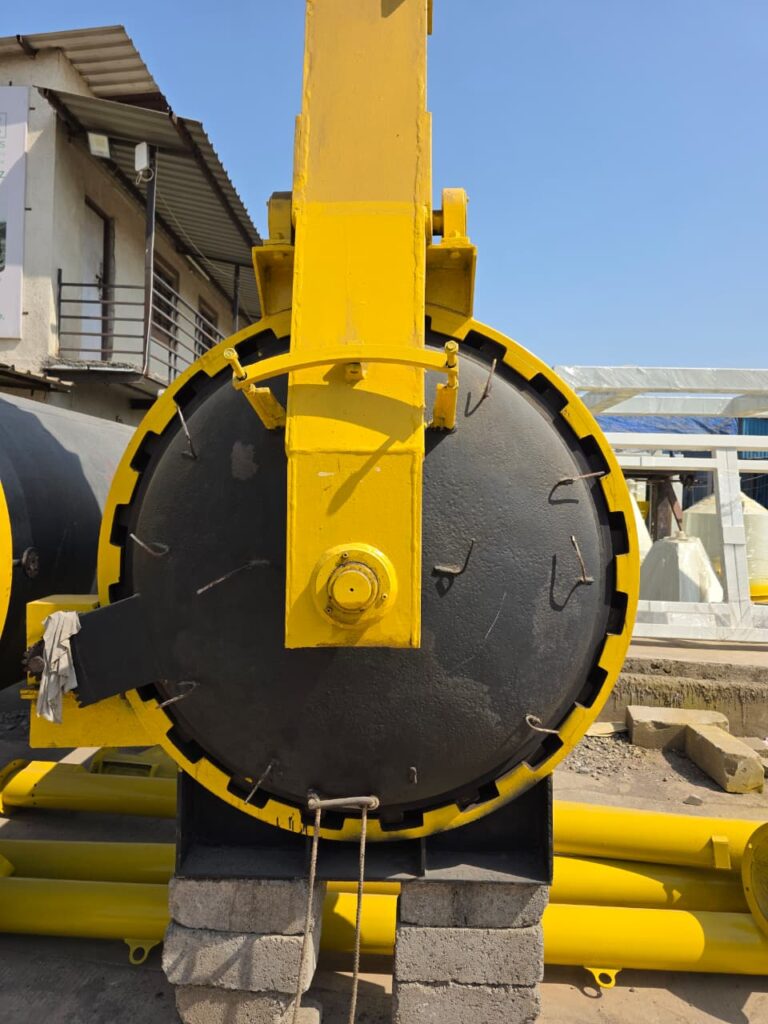
An AAC block machine with autoclave is a special equipment that is used for the manufacture of Autoclaved Aerated Concrete (AAC) blocks, which are lightweight and fast-developing alternatives to the traditional brick. The actual procedure starts by mixing raw materials such as cement, lime, gypsum, fly ash, and aluminum powder. This mixture is poured into molds. A foaming reaction occurs in the mold, resulting in the formation of tiny air pockets causing the AAC blocks to become lighter and more insulating. The molded block is subjected to curing inside an autoclave-a big high-pressure steam chamber that reinforces the strength, durability, and dimensional accuracy. The autoclaving process makes the blocks extremely durable, fire-resistant, and capable of sustaining harsh environments. With their straight dimensions for easy handling and production with eco-friendly methods, AAC block machines with autoclave are leading the wave of revolution in the construction sector in Ghana and the world beyond.
Benefits of AAC Block Machines with Autoclave
One of the major advantages of using autoclaved aerated concrete (AAC) block machines with autoclaves in the construction processes is attributed to the exclusive production process which makes the properties of the material unique. The outstanding feature of this production technology is the subject, which is the autoclave, a high-pressure steam chamber, that helps realize the above benefits.
- Durability and Strength
The steam curing in the autoclave contributes towards durability and strength in the AAC blocks. In fact, during this process, the blocks undergo exposure to high-temperature steam under high pressure, which creates a conducive environment for reactions within cement, lime, and fly ash mixtures that formulate a strong crystalline structure. This is very similar to what happens in nature in forming minerals over time, just faster within the autoclave. And as a result, there comes a block which is not only lightweight but also much high in compressive strength, hence stronger and brittle as well as weather resistant.
- Environment Friendly
AAC blocks are considered an environmentally friendly material for construction. The manufacturing process consumes significantly less cement in comparison to conventional concrete, which is a key contributor to global carbon dioxide emissions. Besides, the main raw materials like fly ash (generated from burning coal), lime, and sand commonly are waste or widely available resources, thus, less consumption of virgin materials. It contributes also to the “green” image of the final product in the terms of energy efficiency through less operational energy consumption in buildings.
- Energy Efficient
They insulate excellently, indeed one of the most important benefits of AAC blocks is their excellent insulation properties. The cavity wall structure of AAC blocks, filled with millions of tiny air pockets, makes a barrier towards heat transfer similar to the working of a foam cooler, which helps keep beverages cool. Very good thermal insulation of buildings constructed with AAC blocks can be said to reduce the energy requirement for heating and cooling of buildings. This translates into less cost in cooling the building, particularly in the hot climatic zones where the building would significantly reduce carbon footprints across the building’s life.
- Faster Production
AAC block machines with autoclaves contribute to faster production and greater efficiency. The fully automated and controlled environment of the production line enables mass production of blocks of uniform dimensions. Each block is guaranteed to be the right measurement because of the efficient mixing, molding, and cutting processes. Quick curing time in the autoclave, which takes hours instead of days or weeks, shortens the entire production cycle significantly, allowing constant and steady supply of blocks for large-scale projects.
- Cost-Saving
Cost savings are pegged on the use of AAC blocks over time in construction and operation of the building. Being lightweight, transporting them costs less, and also, they are pretty easy to handle, thus quickening the pace with which the buildings are constructed and cutting down on labor costs. Their similarity reduces wastage and plastering requirements. And on top of that, cost savings also reflect in their long-term energy consumption due to a markedly high thermal insulation capacity, thereby truly making them a prudent investment for modern construction.
Why AAC Blocks are in High Demand in Ghana
Speeding Up Construction Projects and Saving Costs
Urbanization and an increase in residential and commercial constructions are the forces propelling the construction sector of Ghana to progress rapidly. They favour employing AAC blocks as they are capable of fast-tracking construction time significantly in this high-growth environment. Their larger size and lighter weight compared with traditional clay bricks allow walls to be built much faster with less labor. Furthermore, their precise dimensions and smooth surface which require less mortar and plastering reduce costs of materials applied in such projects and the time for completion. While for a single unit, the price of an AAC block might be more than that of a clay brick, overall, the project ends up spending less money because of savings on labor, mortar, and finishing materials.
Energy Efficiency and Sustainability
AAC blocks are the necessary buildings in a country like Ghana, where energy-efficient buildings are pillars in that hot climate. They present the best option because they are endowed with an excellent thermal insulation property. The aerated and porous structure of these blocks contains millions of minute air pockets, which greatly retard the passage of heat, thus keeping the buildings cool in the summer, less reliant on air conditioning, and low energy bills for residents. Furthermore, AAC blocks are a sustainable option to conventional materials. They are easily produced using many industrial by-products such as fly ash, which helps reduce trash as well as directly minimize environmental harm from construction . The process of forming these materials proves to be even more eco-friendlier by using less raw material and emits fewer greenhouse gases as compared to the firing process for clay bricks.
Conclusion
AAC blocks are a brilliant option in a rapidly developing country where construction activities are controlled more and more with an increasing sense of environmental awareness. These are methodologies closer to the 21st-century builder in terms of cost and time efficiency while addressing the increasing demands for sustainable and energy-saving spaces. The mix of their fast-building capabilities, reduced costs, and environmental advantage in utilization confirms them as one of the key materials in Ghana’s evolving construction space.