
AAC block autoclave manufacturer in Africa
- Home
- About Us

We’re a global award wining company
AAC block autoclave manufacturer in Africa - High quality solution for modern construction
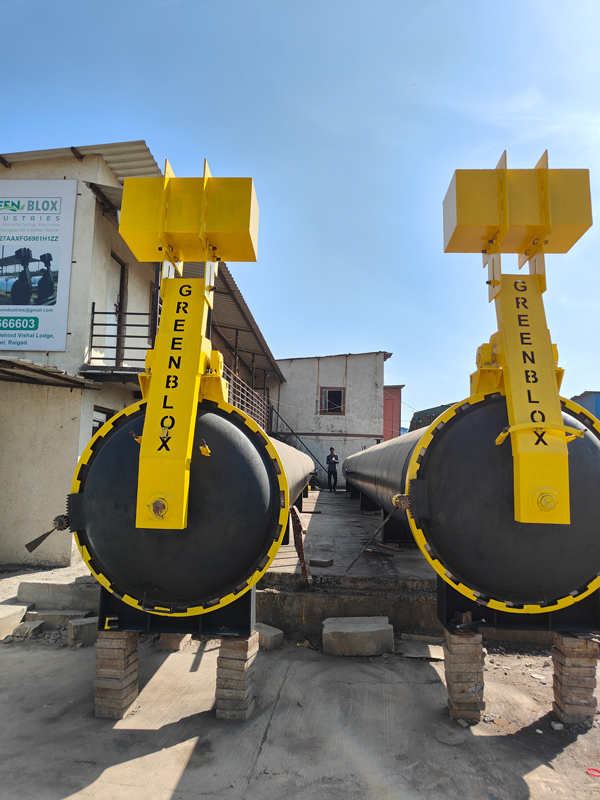
Autoclaved aerated concrete (AAC), being a block, light and pre -manufacturing materials, are known for their excellent insulation, durability and environmentally friendly nature. Made from a mixture of cement, lime, sand and aluminum powder, AAC blocks are cured inside high pressure steam chambers that are called autoclaves for strength and dimensional accuracy. As the construction industry in Africa grows at an unprecedented rate, growing towards stability and energy efficiency, the demand for AAC blocks will be extended by the quality assurance given through autoclaving. As a reputed AAC block autoclave manufacturer in Africa, we provide advanced, reliable and performing-efficient solutions to meet the growing demand for infrastructure projects throughout the continent.
We’re a global award wining company
What is AAC Block Autoclave?
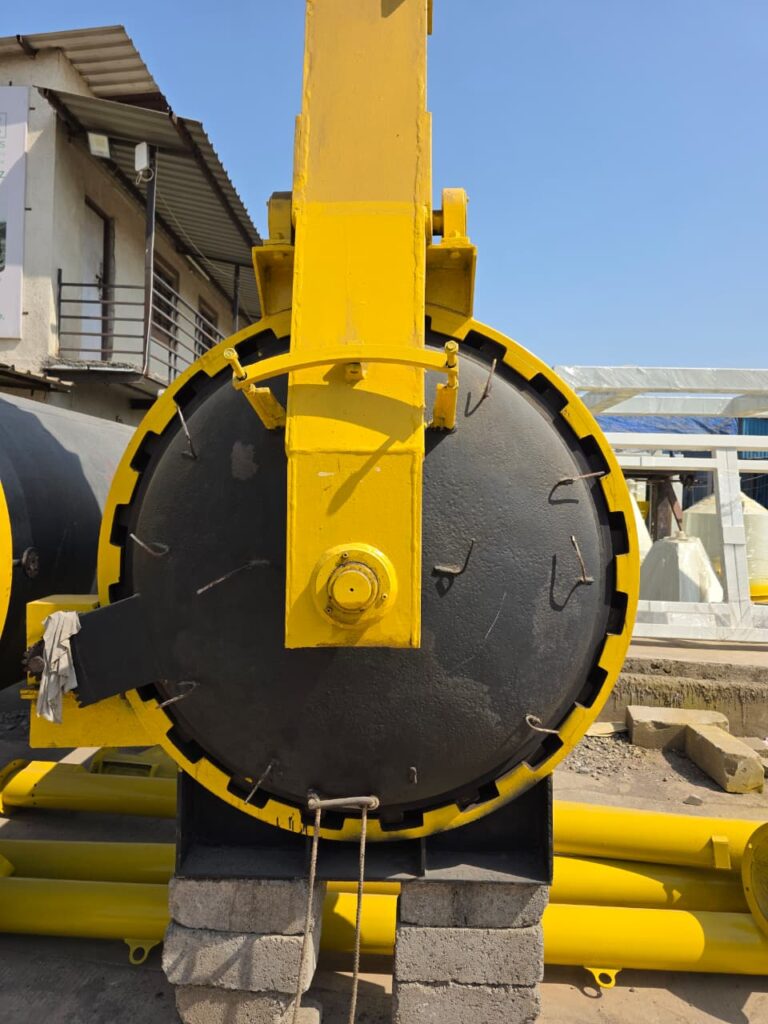
The AAC block autoclave is defined as a steam treatment chamber with high temperatures and pressure, especially designed for the production of autoclaved aerated concrete blocks. After mixing raw materials, molding and pre-alleges, the block is placed in the autoclave, where they are subject to saturated steam under high temperatures and pressure. This treatment process, known as autoclaving, accelerates the chemical reactions responsible for blocking its great power, dimensional stability and durability to AAC. Autoclave ensures uniform treatment, thus producing coherent and high quality blocks to suit international standards; Therefore, it is an important machine in any AAC block manufacturing plant.
Rising Demand of AAC Blocks in Africa
All these factors have increased the demand for autoclaved aerated concrete blocks in Africa, whereby demand and supply are being molded by urbanization, sustainability, cost-effectiveness, and government policies. The demand for this building material is becoming increasingly acute among the growing population and urban migration in Africa.
- Urbanization Measures and Development of Infrastructure
Massive urbanization, as witnessed in most parts of Africa, creates enormous demands for new residential buildings, new commercial buildings, and industrial buildings. These demands cannot be satisfied by traditional methods of building construction. The general principles of prefabricated systems in connection with AAC are its lighter weight and larger dimensions compared with conventional bricks, allowing for quicker times of construction. Speed is a major benefit of AAC in large infrastructure and housing development. Low transportation costs due to lightweight construction and easy handling on job sites, especially into remote or inaccessible areas, are additional advantages.
- Durable and green manufacturing materials.
Awareness and pressure of durable and environmentally friendly construction practices around the world is increasing, and Africa is no exception. AAC block is a green manufacturing material because they are easily available, non -toxic, raw materials such as cement, lime, sand and water. They are produced in a way that traditionally uses less energy than used to manufacture bricks. In addition, due to the excellent thermal insulation properties of the material, it reduces air-conditioning and heating use in buildings, thus having low energy consumption and low carbon footprints in long periods. It is related to global efforts to reduce climate change towards sustainable development.
- Price effective
While the initial cost of the AAC block is often lower at the entire project level than a traditional brick. The reason for this is that the large size and light weight of the block reduces the consumption of mortar and labor, which reduces the time limit for the project. Savings on energy bills for building construction owners are generated due to high quality thermal insulation properties of AAC blocks. High durability for pests, fire and moisture translates to low maintenance and repair costs on the life of the building, thus making AAC block cost effective.
- Government Initiatives
Most of the African governments have developed various policies and incentives to promote eco-friendly, sustainable construction. Such policies form part of the broad national development plans for creating green economies and solving housing shortages in the country. The use of AAC block materials is encouraged and sometimes subsidized by the government, so developers and builders use modern construction methods in new buildings. This builds newer infrastructure with high morale in meeting future demand for new buildings, while at the same time ensuring that the new infrastructure meets higher standards on environmental performance and efficiency.
Benefits of Using AAC Block Autoclaves
The use of AAC block autoclave has many advantages, including uniform consistency of products, high compressive strength, fast production cycles, energy efficiency, and longevity. The autoclave process is the principal process in manufacturing Autoclaved Aerated Concrete (AAC) blocks, where blocks are subjected to high-pressure steam. This process enhances the physical and mechanical properties of blocks.
- Consistent Product Quality
The use of the autoclave guarantees the consistent quality of the product, being the environment for curing of the blocks under controlled and uniform conditions. High-pressure, high-temperature steam treatment increases the uniformity of the chemical reaction throughout the entire batch of blocks, thus ensuring uniformity of cell structure and density. If such an environment was not maintained, the uneven curing of blocks may cause variations in the strength, size, and overall quality.
- High Compressive Strength
Compressive strength, which is the property of AAC blocks, is obtained during autoclaving. During the process, silica from the raw materials reacts with calcium hydroxide to form CSH (calcium silicate hydrate), a crystal structure that binds the material together. This structure provides the excellent strength-to-weight ratio of the block, thereby forming a reliable and sturdy building material. This strength facilitates building against multi-storied structures without any structural support needed.
- Faster Production Cycles
Compared to air curing done traditionally, autoclaving considerably shortens the production cycle. In air curing, weeks are spent trying to achieve the required strength while autoclaving cures the blocks within a matter of hours. This speed allows manufacturers to produce a greater volume of blocks in a shorter time, thereby increasing productivity and more quickly satisfying the market demand.
- The process of energy-efficient curing.
Although autoclaving requires both high pressure and temperature, it has been found to use energy efficiently when cured. Recycling and reusing steam in the autoclave results in reduced waste. Furthermore, curing time is usually extremely brief and uses far less energy for each block than that required for energy use in emphasizing the period needed by conventional curing processes. The heat energy from the autoclave may also be recovered to preheat the next batch of blocks.
- Long Durability and Minimum Maintenance
Autoclaving means that the CSH crystal structure formed gives good strength and durability of AAC blocks against several environmental agents. The blocks resist fire, pests, and moisture: the attributes enhancing their long life durability. Their inherent properties do not substantially compel any extensive maintenance themselves over time in the lifespan of the building. Because of this durability, they could be cost-effective against most long-term constructions.
Conclusion
Conclusively, AAC block autoclaves are crucial during the manufacturing process as they provide a wide variety of benefits that would come to influence quality as well as productivity. The high-pressure steam curing ensures that blocks would have uniformity and maximum packing within themselves to yield compression-sustaining durability. Autoclaving optimizes curing time against long production cycles, conserving energy for next batches. Such benefits make AAC blocks a much valuable and sustainable construction material, providing a reliable and long-lasting option for adoption within a number of construction needs.