
AAC plant autoclave manufacturer in Africa
- Home
- About Us

We’re a global award wining company
AAC Plant Autoclave Manufacturer in Africa – Leading the Future of Sustainable Construction.
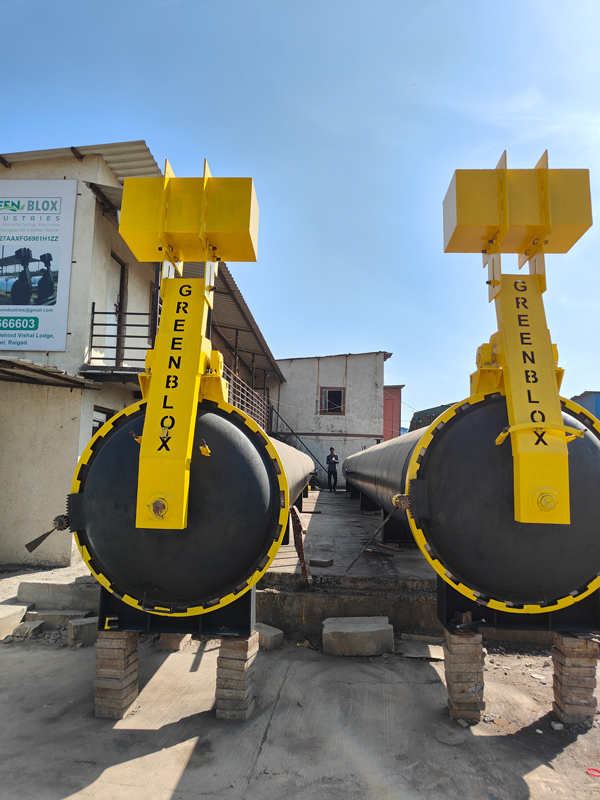
Autoclaved Aerated Concrete (AAC) is fast becoming a modern choice in construction due to its lightweight as well as eco-friendly and highly durable properties. Whereas traditional bricks lack insulation and fire resistance, AAC blocks offer excellent insulation at a lower cost, which is very appropriate for large-scale housing and infrastructure projects. The heart of AAC production is the autoclave, a critical machine that makes blocks strong, durable, and consistent by curing them at high pressure and steam. With Africa quickly urbanizing and needing sustainability in construction, the role of AAC plant autoclaves' manufacturers would become more relevant. The future of AAC in the construction sector of Africa would be defined by quality, technology, and long-term benefits.
We’re a global award wining company
What is an AAC Plant Autoclave?
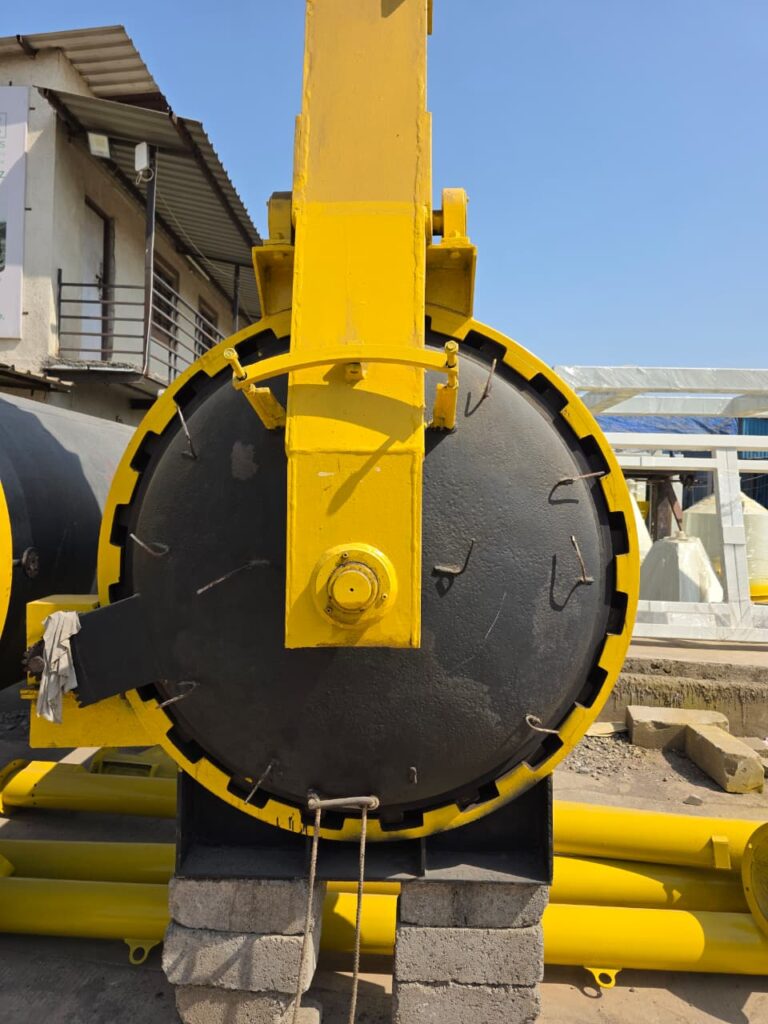
A specialized pressure vessel used in production of AAC blocks is an AAC plant autoclave. After shaping and partly setting green AAC blocks, they will be transferred to the autoclave, where high pressure will be applied in saturated steam at controlled temperature levels. This curing of the blocks is called autoclaving, and it gives them very good strength, durability, and dimensional stability. The material will get a significantly improved thermal insulation and fire-resistance attributes that make AAC blocks superior to their conventional counterparts as far as a curing process is concerned. The autoclave is one of the most vital elements in an AAC manufacturing plant as it directly affects the quality and performance of the end product. Hence, it would be prudent to select a reliable AAC plant autoclave manufacturer, ensuring consistent results and highly efficient large-scale production.
Key Features of a Reliable AAC Plant Autoclave Manufacturer
- High-Quality Materials: The Largest Manufacturing Process
The best providers will be using special high-grade, corrosion-resistant steel, often a specialized alloy, that makes up the pressure vessel in order for the autoclave to stand the extreme heat and pressures during the processing in an autoclave. The advanced manufacturing techniques such as precision welding, stress relieving, and non-destructive testing methods like X-ray or ultrasonic inspection are used for the effective structural integrity and longevity of the autoclave. Being robust reduces the chance of a failure and therefore extends the life of the autoclave as well as ensures worker safety.
- Standards Compliance and Safety
Complying with international safety and quality standards is one of the most important factors. An established manufacturer will comply with ASME (American Society of Mechanical Engineers) or European Pressure Equipment Directive (PED). This is because compliance shows that the autoclave has been designed, built, and tested under quality safety standards. It ensures the safety of the people and equipment of the entire plant while also allowing for international trade and regulatory approval.
- Energy Efficiency and Customization
Energy-efficient design is one of the most important components regarding the input costs for a plant. Advanced modern autoclaves are using those modifications which include sophisticated insulation, alternative heating systems with their getting automatic control to bring about their energy consumption minimization by optimizing the heating and curing cycles. A reliable manufacturer also offers tailor-made solutions matching the requirements of a specific AAC plant, including variations in the autoclave’s size, pressure ratings, and control systems that harmonize with the production capacity and layout of the plant for optimal performance and integration.
- After-Sales Service
Last but not the least, complete after-sale services are a hallmark of a trustworthy manufacturer. These include installation support, operator training, routine maintenance services, and immediate technical support. Prompt attention and the availability of needed spares keep breakdowns to a minimum so that the AAC plant can continue to operate smoothly and efficiently. This long-term partnership with the manufacturer promises peace of mind along with safeguarding the original investment.
Benefits of Partnering with the Right Manufacturer
● Consistent Product Quality : Choosing the right manufacturing partner is the first and foremost step in ensuring consistency of product quality. The right partner will ensure that quality control measures are in place during each step of the way- be it sourcing of raw materials or during the production process. This consistency ensures that every batch of AAC blocks meets the required strength, size, and thermal insulation standards. With this consistent supply of materials, the order becomes a tool for preventing structural issues in construction, excess material wastage, and, above all, ensuring the finished building behaves as expected. Inconsistency of material can complicate work on site with costly time delays and additional costs for rework.
● Enhanced Plant Efficiency and Productivity : The right choice of a manufacturing partner can greatly improve plant efficiency and productivity. An efficient manufacturer is assumed to have an optimized production process using modern machinery and optimized workflows. Such efficiency promotes quick turnaround with a solid supply chain. In this way, a construction company can have a partner supplying it consistently and therefore keep its project schedules without even having to worry about shortage of materials. The manufacturer can also actively cause innovation and improvements in production, which will help increase overall output and make the running of the whole operation much more productive.
● Reduced Downtime and Maintenance Costs : When partnered with an accountable manufacturer, reduced downtime and reign of maintenance costs increases are assured. Quality AAC blocks do not easily allow for defects, thus fewer incidences of broken or unusable blocks on-site. Less material wastage means less frequent replacements. Good quality materials also counteract their effect on tools and machinery used to cut and lay blocks, thereby extending their life cycles and less maintenance and replacement costs. All these lead to savings, and project delays arising from material failure or equipment breakdowns are avoided.
● Long-Term Durability and Performance : The use of high-quality AAC blocks from a reputable manufacturer ensures long-term durability and performance of a building. These blocks are known for their excellent structural integrity, fire resistance, and moisture resistance. A reliable manufacturer will produce blocks that are engineered to withstand environmental stresses and time. This durability means that the building will require less maintenance and fewer repairs over its lifespan, providing significant cost savings and peace of mind to the end-user. Ultimately, a building constructed with superior materials is a more valuable and reliable asset.
● Contribution to Africa’s Sustainable Construction Growth : Working with a dedicated AAC block manufacturer will make tangible efforts toward the sustainable construction growth of Africa. AAC blocks are inherently eco-friendly; they are made from abundant raw materials and consume less energy in manufacturing than traditional bricks. Their excellent thermal insulation minimizes excessive energy consumption due to heating and cooling needs in the completed building. By promoting the use of such sustainable materials, the company assists in reducing the carbon footprint and responsible building practices, which are critical towards the continent’s long-term sustainable development. Such a partnership will lead to a greener and more sustainable future for the African construction industry.
Conclusion
Quite simply, the choice of a manufacturing partner for AAC blocks is much more than just a transaction. It is a strategic decision affecting product quality, operational efficiencies, financial costs, and a company’s commitment to sustainability. A meaningful partnership translates into a reliable supply of quality raw materials, thereby allowing for efficient and profitable projects. In the African context, it also creates an avenue for sustainable building practices that facilitate environmental and economic empowerment. Choosing wisely when it comes to manufacturers is not, and it should never be, a mere fortunate accident.