
AAC Block Manufacturing Machine in Saudi
- Home
- About Us

We’re a global award wining company
Manufacturing AAC Blocks In Saudi With Modern Technology For Better Construction
The AAC (Autoclaved Aerated Concrete) blocks have changed the face of the construction industry in Saudi Arabia as they weight light, carry superior strength, and are environmentally friendly. As a result, the Kingdom has also undergone rapid urban development along with the growth of infrastructure in the 2030 Vision. The interest in buying sustainable and energy-efficient construction material has significantly risen. The AAC blocks do extremely well as thermal insulators, ensure soundproofing, and resist fire, making them most ideal for the local climate and modern construction requirements. Again, having realized this increasing demand, there are now necessary AAC block manufacturing machines that provide high-speed, precise, and large-scale productions, as well as consistent quality and efficiency to complete constructions faster while still maintaining high building standards.
We’re a global award wining company
AAC Block Manufacturing Machine: What It Is
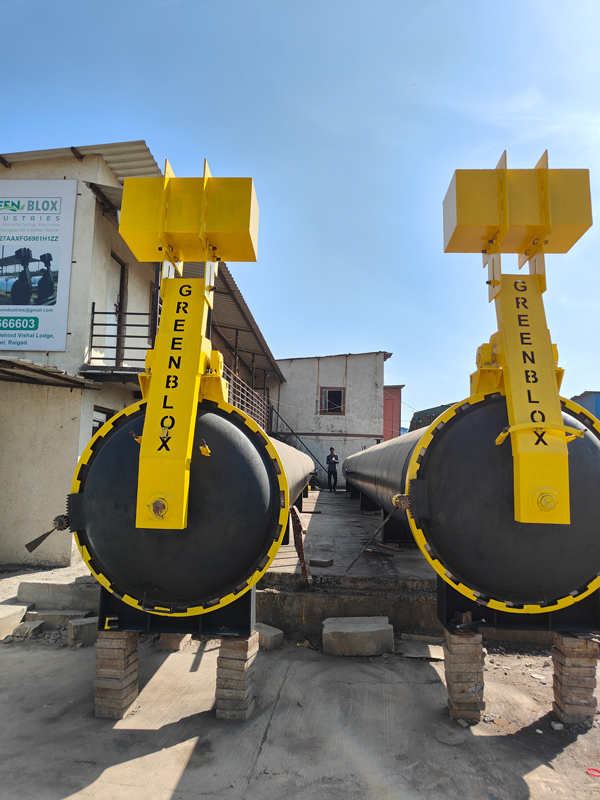
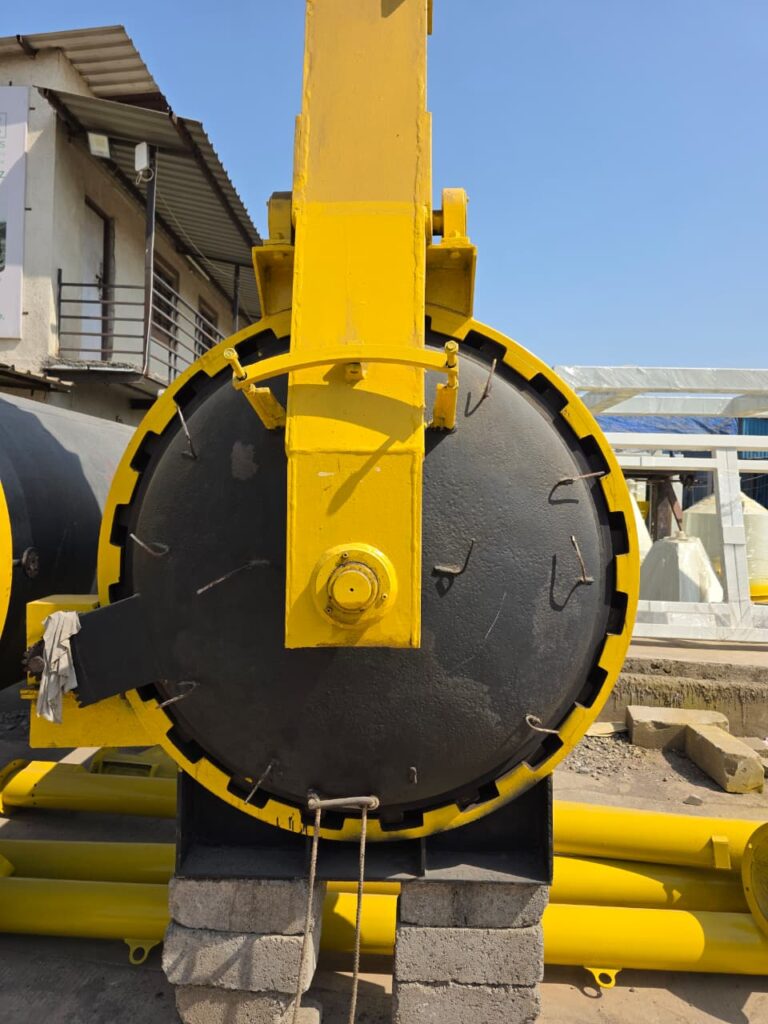
An AAC (Autoclaved Aerated Concrete) block manufacturing machine is an industrial-specific machine that produces high-strength, lightweight reads long AAC special blocks on a large scale. An AAC block machine would automate the entire process of production-from the mixing of raw material to the casting, cutting, curing, and packing. The machine prepares aerated concrete with the precise mixing of raw materials such as cement, lime, sand, gypsum, water, and aluminum powder. This aerated concrete would later be cured at high-pressure autoclaves to achieve strength and performance. AAC block manufacturing machines can be found in semi-automatic and fully automatic types according to various production capacities and project requirements. In Saudi Arabia, these machines will meet the growing requirement for sustainable energy-efficient construction materials, while keeping consistent standards, lowering labor costs as well as time for production. They will be perfectly in line with modern infrastructure development in the country.
Types of AAC Block Manufacturing Machines
- Semi-automatic mechanism for AAC blocks
Less than completely automatic AAC block machines offer a midway interface between automation and manual operation. The semi-automatic machines are better suited for less established companies or firms with only moderate production. The method entails a combination whereby either a portion is automated or handled manually: for example, mixing of the raw materials and pouring the raw material into molds is usually automated for the sake of uniformity whereas demolding, shifting of the times called “cake” (the pre-cured block), and loading into the autoclave may be either manual or assisted by simple equipment like overhead cranes. This mix keeps the initial investment and maintenance costs lower than installations with a full automation level. Production capacity is low in comparison with full automation, but the machines are sufficiently efficient for moderate construction practices and allow for greater process control than needed, making them an excellent choice for cost-effective flexible modes of production.
- Fully Automation of AAC Block Machines
Fully automatic AAC block machines are considered the most efficient and serve the most important area of mass production in the industry. An extremely low output is ideal for large quantity production-oriented industries aiming at large reduction of labor cost. An advanced system takes care of entire manufacturing from mixing preparation, molding, curing, packing, and dispatch of finished blocks. The whole process is under computer control in place of human intervention normally found in traditional methods, giving better accuracy and preciseness in mixing, cutting, and handling. This leads to uniform block quality, minimum wastage of materials, and reduction of expenses. The automated systems are designed with precision guides or wires to cut blocks accurately, along with planning the flow of moving large pre-cured blocks in and out of high-pressure autoclaves. These plants operate continuously, have large production capacity, are capable of minimizing labor dependency and human errors, justify the capital investment with their production capacity, and are so far the most efficient and mounting option.
- Portable/Compact AAC Production Units
Portable or compact AAC production units can be defined as one of the recent innovations meant to fulfill small-scale and localized production needs. These units are miniaturized versions of large supply plants made to be less expensive, space-efficient, and easy to operate. They serve well for first-time entrepreneurs, construction companies that need to produce blocks for use in their projects, or businesses servicing a particular regional demand. The automation of the units can vary quite a bit, but generally, these units are less automated than larger plants and entail a lot of manual labor. The major advantage of these plants is a low initial investment, low energy consumption, and quick setups on-site, which will greatly minimize transport costs and logistics. These compact units may have lower production capacity than semi-automatic or fully automatic machines; however, they provide rather a viable and flexible solution for niche markets and smaller construction projects and showcase that AAC block production can work even on a small scale.
Advantages of Using AAC Block Manufacturing
- Cost-Effectiveness
The introduction of AAC block manufacturing machines has yielded drastic reductions in production costs. With the high level of automation these machines possess, manual labor requirements are reduced, thereby lowering labor costs directly. Apart from that, with a high throughput capacity, these machines allow mass production of AAC blocks, thereby helping the manufacturers fulfill high demand efficiently and at a lower cost per unit. This efficiency renders AAC blocks more cost-effective compared to the building materials that have been used conventionally.
- Quality Consistency
AAC block manufacturing machines maintain uniform product quality. The fully automated manufacturing process maintains consistency in size, density, and strength of blocks, which are important for structure strength and accuracy of building. The more consistent the blocks are, the less need for on-site adjustments and the less waste. This leads to smoother construction processes, and better product finishes. The exact dimensions of AAC blocks mean further reduced mortar consumption, overall lending to additional cost savings and a cleaner worksite.
- Sustainability
AAC production is regarded as the environmentally friendly method. The process employs abundantly available and often locally sourced raw materials such as lime, cement, sand, and aluminum powder. The closure of the loop allows waste materials like slurry from cutting to be incorporated again into the production process. This minimizes waste and ideally reduces the manufacturing plant’s carbon footprint.
- Speed of Construction
AAC blocks and the associated machines make for fast-tracked production schedules. As AAC blocks are lightweight, being larger than a normal brick would mean fewer blocks required altogether, thus easier to handle and install for workers. This accuracy in block work also means less time wasted in masonry work; hence the faster turnaround, which is vital for the prospective tight deadlines facing Saudi’s booming construction industry.
- Construction Energy Efficiency
Thermal insulation remains one of the biggest attractions and advantages of using AAC blocks in Saudi Arabia. The aerated structure of the blocks contains millions of tiny air pockets that acts as an impediment to heat transfer. In hot climates, therefore, buildings constructed of AAC blocks would require minimal energy for air conditioning. This significantly reduces the electricity bills for the occupants of the building and, in turn, reduces the pressure on the national power grid, which is aligned with the country’s objectives of energy conservation and sustainable development.
Conclusion
With AAC block manufacturing machine, construction will never be the same again. It can be time-efficient, cost-effective, and able to produce high-quality sustainable building materials. With infrastructure rapidly growing and being extremely committed to green development, Saudi Arabia is at the forefront of modern construction. Machines like these can always meet the demand, and that too with superior standards. Investing in a reliable, high-performance AAC block-making machine will pay off for years in terms of savings, product quality, and speedy completion of projects. The choice of advanced technology today locks an investment on a stronger, greener, and more effective construction future for builders and manufacturers in the Kingdom.